📑 Table of Contents
- Introduction
- Original Nepali Poem
- English Translation
- Meaning & Explanation
- Background of the Work
- Life Lessons
- Why This Work Inspires Readers
- FAQ
- Related Posts
- Author Profile
- Call To Action
✨ Introduction
“When the rivers dry, it is not only water that disappears.”
“Sometimes, even the earth feels thirsty.”
Chaitra and Baisakh in Nepal are not just months — they are emotions. They carry heat, dryness, cracked soil, and silent prayers for rain. This Khaderi Poem in Nepali captures the painful truth of drought — not just as a natural disaster, but as a living experience.
This is not merely a Nepali drought poem.
It is the voice of the land.
It is the sigh of farmers.
It is the endurance of hope buried under dry soil.
📜 Best Nepali Poem
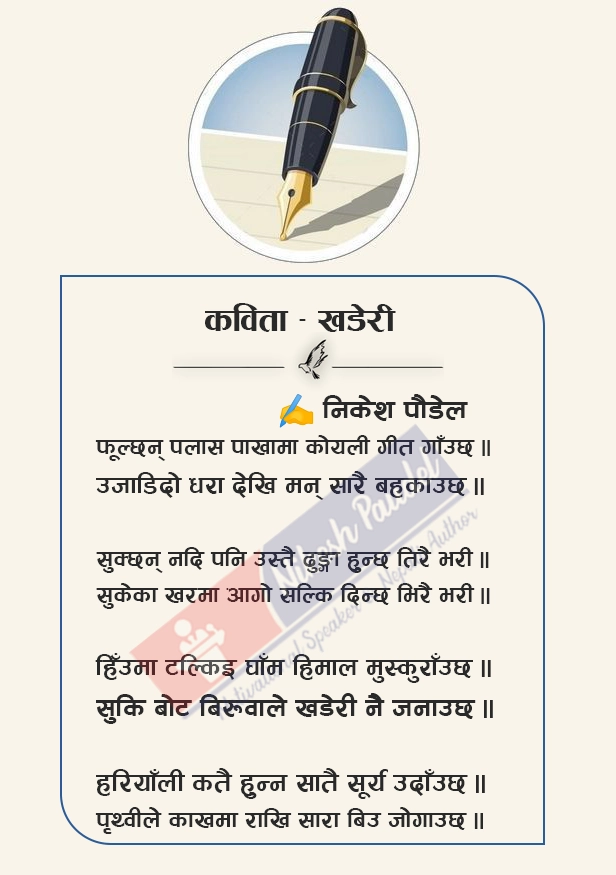
फूल्छन् पलास पाखामा कोयली गीत गाँउछ ।।
उजाडिदो धरा देखि मन् सारै बहकाउछ ।।
सुक्छन् नदि पनि उस्तै ढुङ्गा हुन्छ तिरै भरी ॥
सुकेका खरमा आगो सल्कि दिन्छ भिरै भरी ।
हिँउमा टल्किइ घाँम हिमाल मुस्कुराँउछ ।।
सुकि बोट बिरूवाले खडेरी नै जनाउछ ।।
हरियाँली कतै हुन्न सातै सूर्य उदाँउछ ।।
पृथ्विले काखमा राखि सारा बिउ जोगाउछ ।।
💌 English Translation
Palash blooms on the hills while the cuckoo sings,
Yet the barren earth unsettles the heart.Rivers dry, leaving only stones behind,
Dry grass ignites, spreading fire across the cliffs.The sun shines on snow, and the Himalaya smiles,
But trees and plants announce drought in silence.
There is no greenery anywhere — as if seven suns have risen,
Yet the Earth quietly protects her seeds within her womb.
🔍 Meaning & Explanation
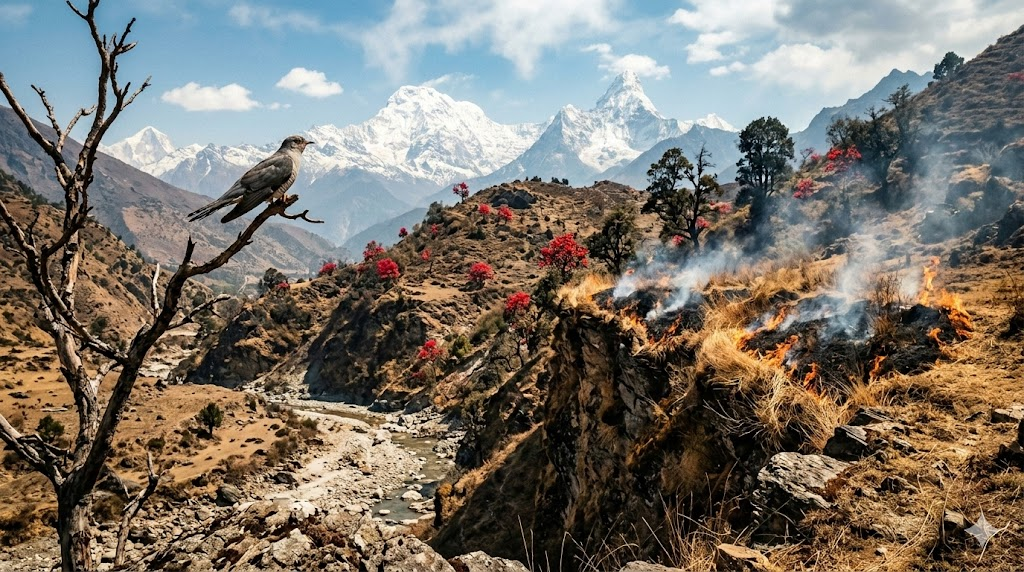
This Khaderi Poem in Nepali portrays the harsh reality of drought during Chaitra and Baisakh. The poet masterfully contrasts beauty and destruction.
Palash flowers bloom, and cuckoos sing — nature appears alive. Yet underneath that beauty lies dryness. The rivers have turned into stone beds. Grass catches fire easily. Hills burn silently.
The Himalaya smiles in the sunlight — but the plants below suffer.
That contrast is powerful.
In this Nepali drought poem, the poet shows how suffering is not always visible from a distance. From far away, mountains look glorious. But up close, the land is cracking.
The line “पृथ्विले काखमा राखि सारा बिउ जोगाउछ” (The Earth protects all seeds in her womb) is the most hopeful line. Even in extreme drought, life is not finished. It is paused.
As someone who has studied rural literature and environmental themes, I believe this dry season poem carries both ecological awareness and emotional depth. It reflects climate hardship in Nepal while symbolizing personal struggle.
Drought here is not only environmental. It is emotional dryness. Financial hardship. Career stagnation. Loneliness.
Yet seeds survive.
And that is the hidden message of this motivational Nepali poem.
📖 Background of the Work
Chaitra and Baisakh are known in Nepal for intense heat and water scarcity, especially in hilly and rural regions. Forest fires are common. Rivers shrink. Agriculture struggles.
This Khaderi Poem in Nepali reflects that seasonal truth. It feels inspired by real experiences of rural life — where drought affects daily survival.
The poem may symbolize modern climate change issues while preserving traditional Nepali poetic style rooted in nature imagery.
It speaks for farmers, villagers, and anyone who has experienced scarcity.
💡 Life Lessons from This Poem
- 🌱 Even when life feels dry, your “seeds” are still safe inside.
- 🔥 Hard times may burn around you — don’t let them burn your hope.
- 🌞 Just because someone smiles doesn’t mean they aren’t struggling.
- 💧 Scarcity teaches strength and patience.
- 🌍 The earth survives every drought — so can you.
- 🌤 Seasons change — pain is temporary.
Let me ask you:
Are you in a drought phase of life — or are you preparing for your next rainfall?
🌸 Why This Work Inspires Readers
This Khaderi Poem in Nepali resonates deeply with:
- Students facing academic pressure
- Youth struggling for employment
- Families dealing with financial crisis
- Individuals battling emotional emptiness
Just like drought, struggles can feel endless. But the poem reminds us — even when greenery disappears, seeds remain alive underground.
It makes readers feel seen.
It validates silent suffering.
It whispers hope without shouting.
That subtle hope is what makes this Chaitra Baisakh poem powerful.
✍️ FAQ
1. What is the main message of this Khaderi Poem in Nepali?
The poem highlights the emotional and environmental pain of drought while delivering hope. It shows that even in extreme dryness, life continues beneath the surface.
2. Why is Chaitra–Baisakh significant in the poem?
These months represent Nepal’s dry season when water scarcity and forest fires are common. They symbolize hardship and survival.
3. Is this poem only about nature?
No. While it describes drought in nature, it also symbolizes personal and emotional struggles people face in life.
4. What does “Earth protecting seeds” symbolize?
It symbolizes hidden hope and future possibility. Even in difficult times, growth is preparing silently.
🔗 Related Posts
If this touched your heart, explore more:
- Dive into emotional reflections in Nepali Poem Collection
- Feel the contrast of ambition in Dreams vs Reality Poem
- Understand sacrifice in Dreams and Sacrifice Poem
- Experience emotional storytelling in Challenges of Elderly Care in Nepal Poem
- Explore love and emotion in Best Nepali Love Poem
👤 Author Profile
Nikesh Paudel
Content Creator | SEO Strategist | Literary Analyst
🌐 Website: https://www.nikeshpaudel.com.np
📧 Email: [email protected]
📘 Facebook: https://www.facebook.com/nikeshpaudel2
🎵 TikTok: https://www.tiktok.com/@nikeshpaudelofficial
▶️ YouTube: https://www.youtube.com/@nikeshpaudel
🐦 Twitter: https://www.twitter.com/nikeshpaudel
📸 Instagram: https://www.instagram.com/nikeshpaudelofficial
“Even in drought, protect your seeds of hope.”
💖 Call To Action
If this Khaderi Poem in Nepali moved you, share it with someone going through a dry season in life.
Comment below — what keeps your hope alive during hard times?
Subscribe for more emotional and motivational Nepali poems.
Let’s remind each other:
Drought is a season — not destiny. 🌱