
📑 Table of Contents
- ✨ Introduction
- 📜 Best Nepali Gajal
- 💌 English Translation
- 🔍 Meaning & Explanation
- 📖 Background of the Work
- 💡 Life Lessons
- 🌸 Why This Work Inspires Readers
- ✍️ FAQ
- 🔗 Related Posts
- 👤 Author Profile
- 💖 Call To Action
✨ Introduction
The city shines from far away. But up close, it carries shadows.
Every new face hides a story. Every bright light hides a struggle.
This Best Nepali Gajal captures the emotional journey of someone who leaves Karnali with hope — only to discover the hidden darkness of the city. It speaks about migration, unemployment, silent desires, and the dreams we quietly sacrifice.
If you have ever left your village with big hopes…
If you have ever felt lost in a crowded city…
This emotional Nepali poetry will feel personal.
📜 Best Nepali Gajal
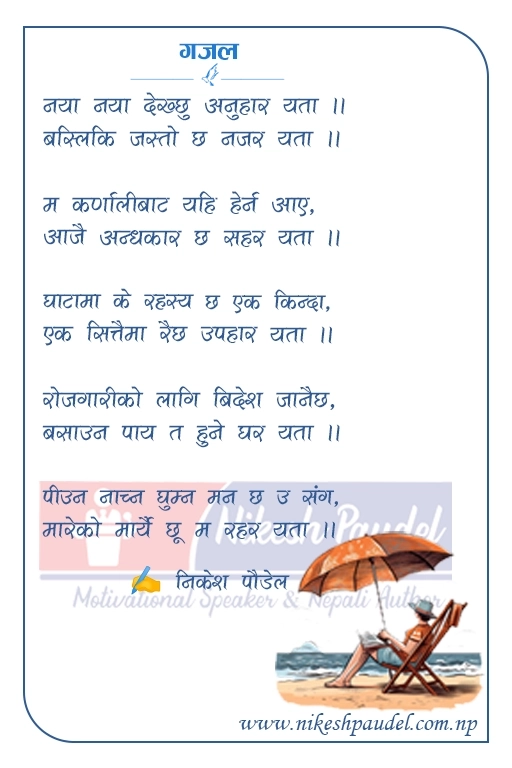
नया नया देख्छु अनुहार यता ।।
बस्लिकि जस्तो छ नजर यता ।।म कर्णालीबाट यहि हेर्न आए,
आजै अन्धकार छ सहर यता ।।घाटामा के रहस्य छ एक किन्दा,
एक सित्तैमा रैछ उपहार यता ।।रोजगारीकोलागि बिदेश जानैछ,
बसाउन पाय त हुने घर यता ।।पीउन नाच्न घुम्न मन छ उ संग,
मारेको मार्यै छू म रहर यता ।।
💌 English Translation
New faces appear everywhere here,
Eyes stare as if searching for something.I came from Karnali just to see this place,
Yet today, I find darkness in the city.There’s some hidden trick in every deal —
Buy one at loss, get one “free” as a gift.For employment, I must go abroad,
Otherwise, I would have built my home here.I wish to drink, dance, and wander with her,
But I have been killing my own desires.
🔍 Meaning & Explanation
This Best Nepali Gajal is more than poetry — it is a mirror of modern Nepali society.
The first couplet shows alienation. New faces everywhere, but no familiarity. The gaze feels temporary, unsettled. It reflects how migrants feel invisible in big cities.
The line about coming from Karnali carries deep emotional weight. Karnali represents rural struggle, hope, and innocence. Arriving in the city with expectations, only to find “darkness,” symbolizes broken illusions. This emotional Nepali poem beautifully contrasts hope with harsh reality.
The third stanza cleverly critiques consumer culture. “Buy one, get one free” — but at what cost? It exposes hidden systems where people often lose more than they gain. In modern Nepali literature, such metaphors reflect economic pressure and social manipulation.
Then comes the painful truth of foreign employment. Many Nepali youths dream of building homes in their own country. Yet unemployment pushes them abroad. This line alone makes this one of the most relatable pieces of Nepali poetry for today’s generation.
And finally, the most human confession:
The desire to enjoy life — to love, dance, live freely — yet constantly suppressing those dreams.
As someone deeply involved in Nepali literature and youth storytelling, I can confidently say this is not just a poem. It is a lived reality. That’s what makes it a Best Nepali Gajal — it speaks what many feel but rarely express.
The struggle between responsibility and desire.
Between survival and happiness.
Between dreams and compromise.
This motivational Nepali poem does not shout. It quietly aches.
📖 Background of the Work
This gajal reflects the migration trend from regions like Karnali to urban centers and foreign countries. Nepal’s youth often leave home seeking better opportunities.
The poem draws inspiration from real social conditions — unemployment, city loneliness, commercial traps, and suppressed personal dreams.
It belongs to the evolving category of modern Nepali gajal that blends social awareness with emotional storytelling.
💡 Life Lessons
Here are practical lessons from this Best Nepali Gajal:
- 🔹 Not every shining city guarantees success.
- 🔹 Migration brings opportunity — but also loneliness.
- 🔹 Economic systems often hide deeper realities.
- 🔹 Suppressing dreams for survival is painful but common.
- 🔹 Building a home is not just about money — it’s about belonging.
- 🔹 Balance responsibility with small moments of happiness.
👉 Have you ever sacrificed your personal dream for responsibility?
🌸 Why This Work Inspires Readers
This piece resonates deeply with students, job seekers, migrants, and dreamers.
If you’ve prepared for foreign employment exams…
If you’ve left your village for Kathmandu…
If you’ve killed your small desires to support your family…
This Best Nepali Gajal feels like your own diary.
Unlike a simple romantic Nepali poetry piece, this gajal blends love, economics, migration, and emotional sacrifice.
It reminds readers:
Your struggle is valid.
Your dreams matter.
Your pain is shared.
That emotional connection is what makes it powerful.
✍️ FAQ
1. Why is this considered a Best Nepali Gajal?
Because it reflects real societal issues like migration, unemployment, and suppressed dreams. Its emotional depth and social relevance make it relatable and impactful.
2. What is the main theme of this gajal?
The main themes include city illusion vs reality, foreign employment pressure, economic struggle, and sacrificing personal desires.
3. How does this gajal connect to modern Nepali youth?
Many young Nepalis leave their homes seeking work. The poem captures their emotional journey, loneliness, and quiet sacrifices.
4. Is this gajal motivational?
Yes. While it portrays struggle, it also validates resilience and encourages self-awareness and balance.
🔗 Related Posts (Internal Linking)
If this touched you, explore more heartfelt writings:
- Explore more powerful verses in Nepali Gajal Collection
https://nikeshpaudel.com.np/nepali-gajal/ - Read socially reflective poetry in Nepali Poem Archive
https://nikeshpaudel.com.np/nepali-poem/ - Discover emotional depth in Nepali Gajal: Dreams vs Reality
https://nikeshpaudel.com.np/nepali-gajal-dreams-vs-reality/ - Understand sacrifice in Nepali Gajal: Dreams & Sacrifice
https://nikeshpaudel.com.np/nepali-gajal-dreams-sacrifice/ - Explore relationship priorities in modern life
https://nikeshpaudel.com.np/mother-vs-girlfriend-priority-modern-life/
👤 Author Profile
Nikesh Paudel
Writer | SEO Strategist | Literary Analyst | Digital Creator
🌐 Website: https://www.nikeshpaudel.com.np
📧 Email: [email protected]
📘 Facebook: https://www.facebook.com/nikeshpaudel2
🎵 TikTok: https://www.tiktok.com/@nikeshpaudelofficial
▶️ YouTube: https://www.youtube.com/@nikeshpaudel
🐦 Twitter: https://www.twitter.com/nikeshpaudel
📸 Instagram: https://www.instagram.com/nikeshpaudelofficial
✨ “Dreams don’t die easily — we slowly silence them.”
💖 Call To Action
If this Best Nepali Gajal felt like your own untold story, don’t scroll away silently.
Share it with someone working abroad.
Tag a friend who left home chasing dreams.
Comment which line touched your heart.
Let’s build a space where Nepali poetry speaks for the unheard.
Your struggle matters.
Your dream matters.
And your story deserves to be told. 💙